In this article
Mobile apps have become an integral part of how companies interact with their clients, run their operations and provide their services. Whether you are a new company ready to release its first product or an established firm that wants to grow online, finding a good [mobile app development company](/) is crucial. The right partner will help turn your business idea into a working application.
With so many companies building apps, choosing the right one can be hard work. Looking at their technical know-how, methodology, communication, pricing and post-launch services will help you decide better.
This guide covers what to expect while choosing a mobile app development company for your business needs.
Key takeaways
- Judge a mobile app development company on experience, portfolio, process, UI/UX skills, pricing clarity, communication, testing and post-launch support, not on the quote alone.
- Native development suits performance-intensive apps; cross-platform (Flutter, React Native) suits products targeting Android and iOS together from one codebase.
- Cost depends on complexity, platform, design, backend, integrations and future maintenance, so ask for a quote based on a written scope.
- Confirm source code ownership and the support you get after launch before you sign.
Why does your business need a mobile app?
Mobile apps let businesses engage customers and run day-to-day operations more directly. Instead of relying only on a website or manual work, a business can have an app built around its own needs. Here are five ways an app can support growth.
1. Improve customer engagement
Apps reach customers through push notifications, personalized content and in-app messaging. An e-commerce company, for instance, can tell customers about order updates, new products and discounts straight from its app.
2. Make business operations easier
Custom-built apps can automate routine tasks, simplify processes and help staff run the company. Scheduling appointments, managing orders, tracking inventory and generating reports can all take less manual effort.
3. Provide better user experiences
A well-made app gives users access to products, services and information through an interface designed for them. Simple navigation, fast load times and easy payment methods make everyday tasks simpler.
4. Reach more customers
Publishing on the Google Play Store and the Apple App Store lets users download your app on their own devices.
5. Support business expansion
As your company grows, the app can grow with it through new features, integrations and user capabilities.
What does a mobile app development company do?
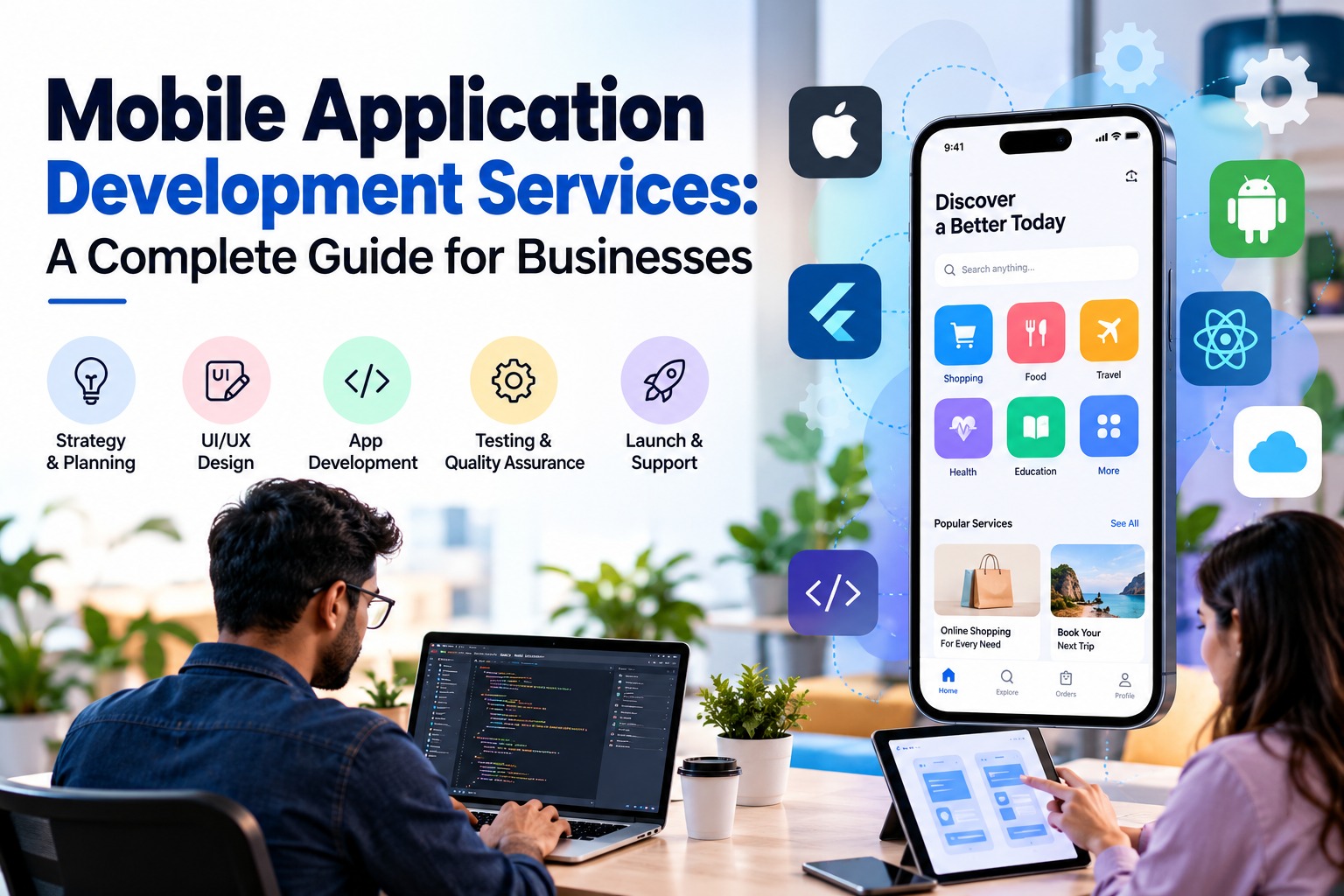
A mobile app development company helps businesses design, build and launch apps for phones and tablets. It is not only about writing code. The team needs to understand your business, choose the right technology and build an app with a good user experience.
Depending on your requirements, a company may offer the services below.
Custom mobile app development
Custom mobile application development means building an app around your business needs rather than using a ready-made template. Such apps can include custom workflows, user accounts, payment systems, third-party integrations and admin functions.
Android app development
This means building apps for Android phones and tablets. Developers typically use Kotlin or Java to build apps that use device-specific features and platform security.
iOS app development
iOS app development covers apps for Apple devices such as iPhones and iPads. Technologies like Swift and SwiftUI help build apps that follow Apple's design and development standards.
Cross-platform app development
Cross-platform development lets you build for Android and iOS from a single codebase. Flutter and React Native are the popular choices, and they help avoid duplicate effort across the two platforms.
Mobile app UI/UX design
UI/UX design covers how the app looks and how people use it. It includes user research, wireframes, screen layouts, navigation design and interactive prototypes created before development begins.
API and backend development
The backend handles application logic, database management, user authentication and communication between the app and other systems. Through API integrations, an app can connect to payment gateways, CRMs, inventory tools and other business systems.
App maintenance and support
Development does not end at release. Regular maintenance keeps the app compatible with new operating system versions and working smoothly.
8 important factors to consider when choosing a mobile app development company
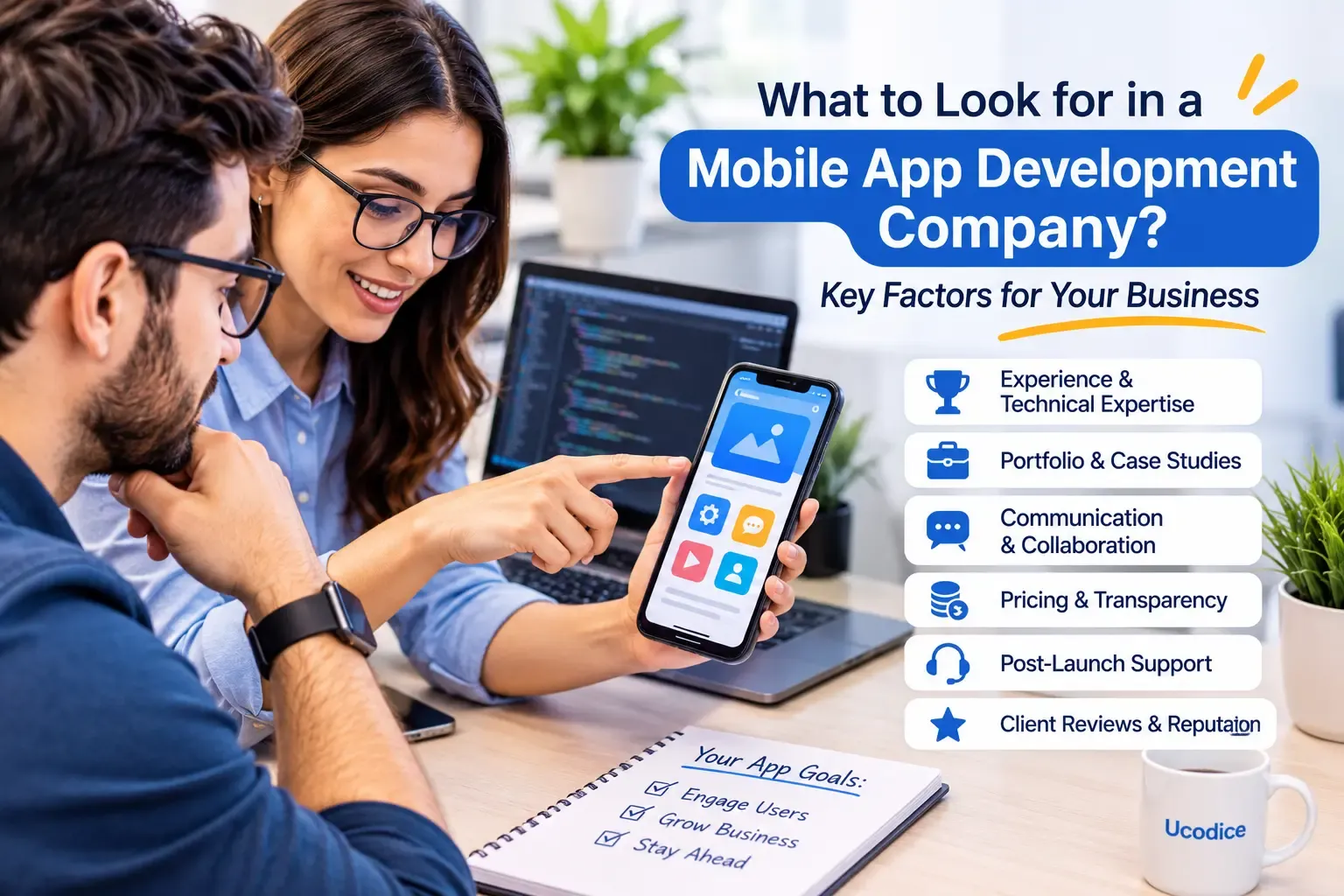
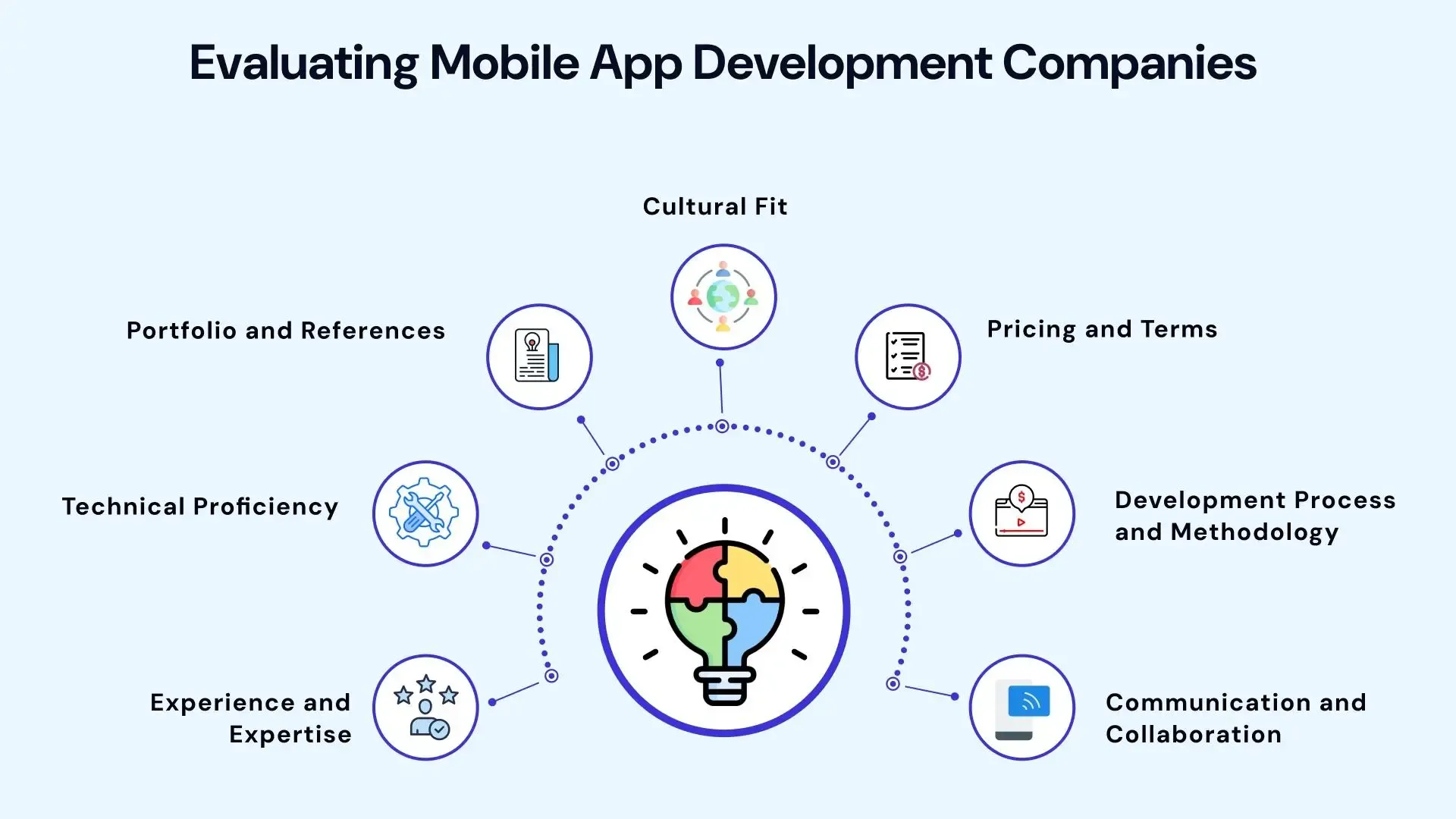
A development partner should not be chosen on the quote alone. You need to know how a company works and what it can actually deliver. Here are eight factors to evaluate.

1. Check their experience and technical expertise
Start with the company's experience in mobile app development. Check whether its developers have worked with the technologies your project needs, such as:
- Kotlin and Java for Android development.
- Swift and SwiftUI for iOS development.
- Flutter for cross-platform applications.
- React Native for Android and iOS applications.
- Node.js, Laravel or Python for backend development.
A company with the right technical experience will understand your needs and suggest a suitable development approach.
2. Review their previous projects and portfolio
A portfolio shows the kind of apps a company has built. While reviewing past projects, look at:
- App design and navigation.
- Features and functionality.
- Performance and responsiveness.
- Industry experience.
- Availability on Google Play or the Apple App Store, where applicable.
Do not judge a company by the number of projects it shows. The quality of its past work matters more.
3. Understand their development process
A well-structured process keeps your project organized and reduces misunderstandings. Ask how the company handles each phase, from the first discussion to launch. A typical mobile application development process includes:
- Requirement analysis and project planning.
- UI/UX design and wireframing.
- Front-end and backend development.
- Application testing and quality assurance.
- App Store and Google Play deployment.
- Post-launch maintenance and updates.
Before work begins, make sure the company spells out the deliverables and project milestones.
4. Evaluate their UI/UX design capabilities
An app can have advanced features and still be hard to use if the navigation is poor or the screens are confusing. Check whether the company has UI/UX designers, and look for:
- Simple navigation.
- Consistent design elements.
- Clear buttons and calls to action.
- Responsive layouts.
- Easy onboarding.
- Accessible screen designs.
Ask for wireframes or a working prototype before you approve the design.
5. Compare pricing and project transparency
The cost of a mobile app depends on its complexity, platform, design needs, integrations and development time. Before choosing a company, ask for a quotation that covers:
- Project scope and features.
- Development milestones.
- Technology requirements.
- UI/UX design costs.
- Testing and deployment.
- Maintenance and support charges.
Do not choose a company only because its quote is the lowest. What matters is a well-defined scope and a clear pricing structure.
6. Check communication and project management
Good communication is essential throughout development. You should know who manages your project and how often you will hear from them. Look for a partner that offers:
- A dedicated point of contact.
- Regular progress updates.
- Scheduled project meetings.
- Working application demonstrations.
- Clear timelines and milestones.
These practices keep you involved and let you track progress.
7. Ask about testing and security
App quality has to be addressed from the beginning, not just before launch. Ask how the team tests the app on different devices, OS versions and network conditions. Important testing areas include:
- Functional testing.
- Performance testing.
- UI testing.
- Device compatibility testing.
- Security testing.
- API and integration testing.
If your app collects personal data or handles payments, discuss authentication and payment security before development starts.
8. Check post-launch support
After launch you may need bug fixes, compatibility updates, speed improvements and new features. Before you hire a company, find out what support it offers after release. Check whether it provides:
- Bug fixing and troubleshooting.
- Android and iOS compatibility updates.
- Security patches.
- Performance monitoring.
- Feature enhancements.
- Technical assistance.
A partner who keeps supporting your app after launch can help with technical needs as they come up.
Native vs cross-platform app development: which should you choose?
An important early technical decision is whether to build separate native apps or use a cross-platform framework. Each approach has strengths depending on your needs.
| Comparison factor | Native development | Cross-platform development |
|---|---|---|
| Technologies | Kotlin, Java, Swift | Flutter, React Native |
| Codebase | Separate codebases | Shared codebase |
| Performance | Excellent for platform-specific requirements | Near-native for many applications |
| Development effort | Separate platform development | Shared development effort |
| Device features | Direct platform access | Platform access through frameworks and native integrations |
| Suitable for | Performance-intensive applications | Products targeting Android and iOS together |
When should you choose native development?
Choose native development when your app needs to make use of specific capabilities of the device.
When should you choose cross-platform development?
Cross-platform development is a good option for companies that want to release on both Android and iOS from a common codebase.
The right approach depends on your product's needs, budget and performance requirements.
What is the mobile app development process?
Knowing the process helps you understand what to expect after hiring a development company. Here is how app development usually goes.
Step 1: Requirement analysis and planning
The first stage looks at your business idea, target audience, competitors and technical requirements. The team defines the key features, users, integrations and technical needs.
Expected outcome: a project scope and a list of features to build.
Step 2: UI/UX design and prototyping
Designers create wireframes and app screens to define layout and navigation. A click-through prototype lets you see how users will interact with the app before development starts.
Expected outcome: approved app designs and prototypes.
Step 3: Application development
Developers build the front end, backend, database and the necessary integrations. The approach depends on the chosen platform and technology stack.
Expected outcome: a working application with the agreed features.
Step 4: Testing and quality assurance
The app is tested for bugs, usability issues, performance and compatibility problems. This makes sure it works as intended on supported devices.
Expected outcome: a tested application, ready for deployment.
Step 5: App Store and Play Store launch
The final step is submitting the app to the respective stores. This includes preparing store listings, screenshots and descriptions.
Expected outcome: the app submitted for approval.
Step 6: Maintenance and improvements
After launch, the team tracks performance and adds improvements based on business and user needs.
Expected outcome: an app that keeps meeting changing business requirements.
How much does it cost to hire a mobile app development company in India?
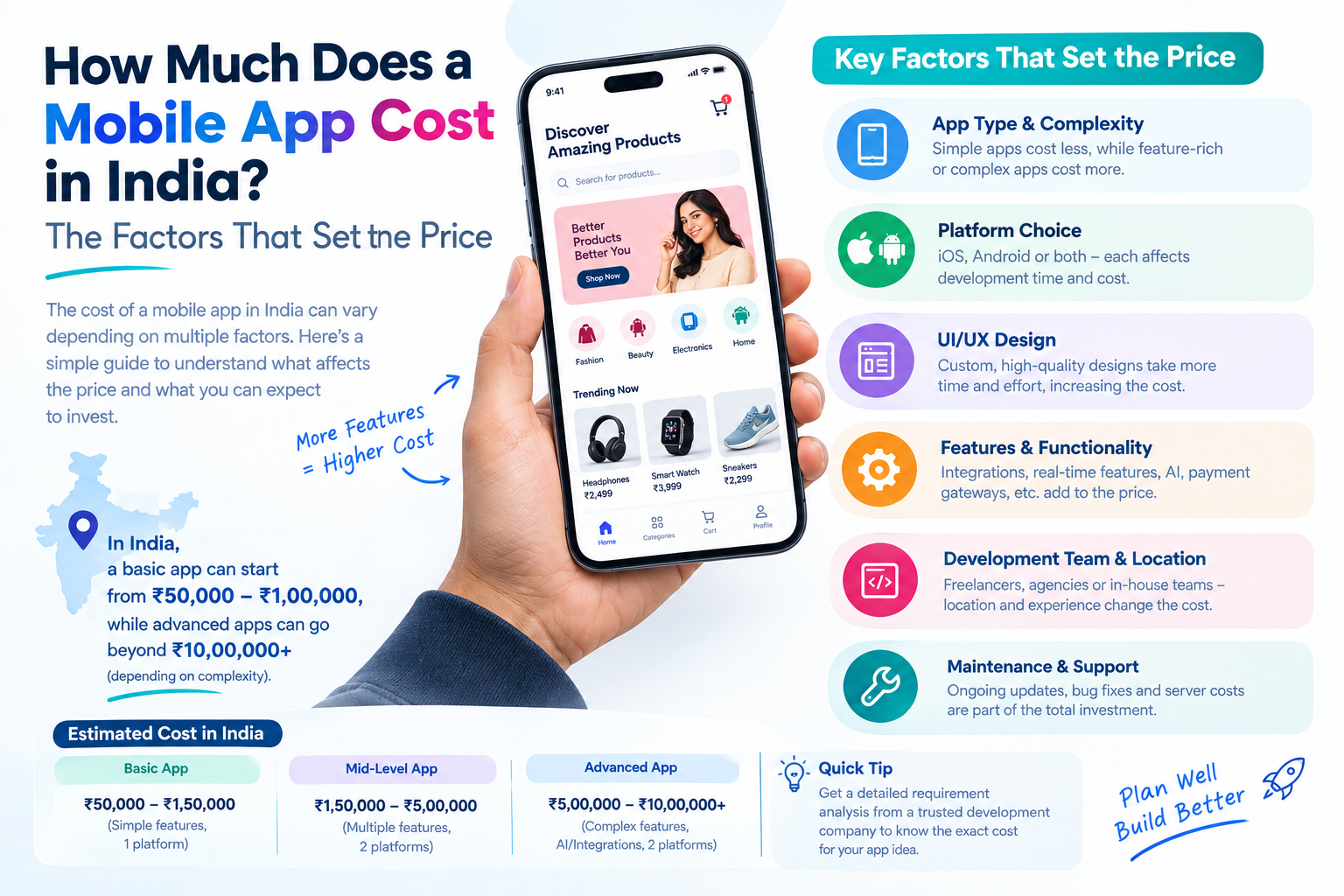
The cost varies with the kind of app you want to build. A simple app with a few features costs less than a complex one with several user roles.
Factors that influence the development cost:
- Application complexity: the more screens, features and workflows an app has, the more complex the development.
- Platform choice: building for Android, iOS or both affects the whole project scope.
- User interface and experience design: custom interfaces and animations need more design time.
- Backend development: apps that use databases, APIs, user management and server-side logic need extra development.
- Third-party integrations: payment gateways, maps, CRM tools and external APIs add to the complexity.
- Maintenance considerations: plan for future updates, security improvements and technical support.
Rather than choosing a partner on price alone, ask for a quotation based on your requirements and what the project needs. Our guide to how much a mobile app costs in India goes through these factors in more detail.
Questions to ask before hiring a mobile app development company
Before you pick a development partner, ask questions that reveal its technical skills and process.
1. Have you developed applications similar to my business idea?
This shows whether the team has relevant project experience.
2. Which technology would you recommend for my application?
The company should explain why a particular technology suits your needs before it suggests a framework.
3. How will you manage the development timeline?
Ask about project milestone dates and how delays are handled.
4. Will I receive regular progress updates?
Understand how the company shares updates and demonstrates working features.
5. Who will own the application source code?
Intellectual property rights, source code ownership, access credentials and project transfer should be clearly defined in your contract.
6. What happens if I need additional features later?
Ask whether the app's design allows for future changes and how further development will be priced.
7. Do you provide support after launch?
Find out which maintenance and support options are available.
Why choose Ucodice for mobile app development?
Choosing an app development company means choosing a team that understands your business needs and will support you through the whole development process.
At Ucodice, we offer mobile app development services for startups, SMEs and enterprises. We build Android, iOS and cross-platform apps using technologies like Kotlin, Swift, Flutter and React Native.
Through planning, UI/UX design, development, testing and app store deployment, our approach is to build around your business needs rather than from pre-built templates. Here is what companies can expect from Ucodice:
- Custom application development: apps built around your business process, features and audience.
- In-house development team: designers and developers working together.
- Technology selection: recommendations that consider the app's needs and your future plans.
- Regular progress updates: weekly demonstrations to review development progress.
- Clear project scope: requirements defined, and quotations and schedules set, before work begins.
- Post-launch support: maintenance, technical support and updates after deployment.
Ucodice serves companies around the world and in India, with 13+ years of experience, 800+ clients and 1,000+ projects successfully completed.
If you want to build a mobile app, explore our mobile app development services to see how we can help, or contact us for a free consultation.
Conclusion
Choosing the best mobile app development company depends on a careful look at its technical capabilities, experience, communication, development process and post-launch support.
When comparing companies, first define what your app needs, understand your target audience and consider development approaches in light of your business goals.
The right partner does more than build the app. It understands your needs and gives you technical guidance so your product can support the future growth of your business.
Whether you need an Android app, an iOS app or a cross-platform app, choosing the right development company is one of the most important steps toward success.
Frequently asked questions
How do I choose the best mobile app development company?
Check the company's technical skills, prior experience, development process, pricing clarity, communication methods and support after launch. Also make sure it understands your business needs before it offers any solution.
How much does it cost to develop a mobile app in India?
The cost depends on the features, design complexity, choice of platform and backend requirements. Ask for an estimate for your specific project to find out what development will cost.
How long does it take to develop a mobile application?
Development time depends on the complexity, features and design of the app. Basic apps can take a few weeks, while larger apps can take several months.
Which is better: Android or iOS app development?
Neither is better for every business. The choice depends on where your target users are, your budget and the features you need. Many businesses launch on both platforms using a cross-platform framework, while others start with one platform and add the other later.
What is the difference between native and cross-platform app development?
The native approach uses platform-specific technologies, such as Kotlin for Android and Swift for iOS. The cross-platform approach uses frameworks like Flutter and React Native to build for both platforms from a shared codebase.
Can a mobile app development company build an app for startups?
Yes. Development companies can help startups build an MVP and test their business model before releasing an app with all its planned features.
What technologies are used for mobile app development?
Common choices are Kotlin and Java for Android, Swift for iOS, and Flutter and React Native for cross-platform apps. Backend technologies include Node.js, Laravel and Python.
Why is UI/UX design important in mobile app development?
Good UI/UX design makes an app user-friendly and easy to understand. The right design improves usability and makes actions within the app easier to complete.
Do mobile app development companies provide maintenance after launch?
Most development companies offer continuing support, such as bug fixes, OS updates, security updates, performance monitoring and new features.
Can I upgrade my existing mobile application?
Yes. An existing app can be modified, extended with new features, integrated with third-party software or moved to a new technology platform, depending on its current architecture and your requirements.
Does Ucodice provide Android and iOS app development services?
Yes. Ucodice offers native Android and iOS development, as well as cross-platform app development with Flutter and React Native.
Does Ucodice work with startups and established businesses?
Yes. Ucodice works with startups, small businesses and enterprises to build custom mobile apps based on their business requirements.