CMS Web Development Services:
The Complete Guide to Building Scalable, Easy-to-Manage Websites in 2026
Most businesses don’t find it hard to create a website anymore. What they really struggle with is managing it, growing it, and keeping it updated over time. That’s exactly why CMS-based web development services are now so important.
A modern website is not just a bunch of pages anymore. It’s a living system that needs:
- Regular content updates,
- Performance optimization,
- Security maintenance,
- SEO improvements
- and continuous feature enhancements.
This guide explains:
- What CMS web development services really are,
- Which CMS platforms make sense for different use cases,
- When you should choose CMS over custom development,
- How professional CMS development works,
- And how to choose the right CMS web development partner.
If you are a Startup or a business owner, marketer, founder, or product manager planning a website or platform that your team can handle easily without constant headaches, this guide is for you.
What Are CMS Web Development Services?
CMS (Content Management System) web development services focus on building websites and web platforms in a way that lets non-technical users easily create, edit, and manage content on their own.
Instead of relying on developers for every small change, a CMS lets your team:
- Publish blog posts and pages,
- Update text and images,
- Manage products or content,
- Control site structure,
- And maintain content workflows—without touching code.
In simple terms:
CMS web development services bring together professional website development with simple, user-friendly content management, so your site is easy to use and maintain long term for your business
Why Businesses Choose CMS-Based Websites
CMS platforms didn’t become popular by accident. They solve very real business problems.
1) Faster Content Updates
Marketing and content teams can:
- Publish new pages,
- Update landing pages,
- Manage blogs and resources,
- Make quick changes for campaigns, without waiting for development cycles
2) Lower Long-Term Maintenance Costs
Instead of paying developers for every small edit:
- Routine updates are handled in-house,
- Development time is reserved for real improvements,
- Overall operating costs go down over time.
3) Better Scalability for Content-Heavy Sites
CMS platforms are ideal for:
- Blogs and media sites,
- Corporate websites,
- Documentation portals,
- Ecommerce catalogs,
- Multi-language websites.
They’re designed to handle growing amounts of content efficiently.
4) SEO and Performance Management
Modern CMS platforms support:
- SEO-friendly URLs,
- Metadata management,
- Content structure control,
- Performance optimization tools, which makes ongoing SEO much easier.
Common Types of CMS Web Development Services
Professional CMS web development is more than just installing a theme. It usually includes:
1) Custom CMS Website Development
- Tailored design and user experience
- Custom templates and components
- Optimized for performance and SEO
- Aligned with business workflows
2) CMS Theme & Template Customization
- Modifying existing themes
- Improving UI/UX
- Adding custom sections and layouts
- Ensuring brand consistency
3) CMS Plugin & Extension Development
- Custom features and integrations
- Third-party API connections
- Workflow automation
- Performance and security enhancements
4) CMS Migration Services
- Moving from old websites to modern CMS platforms
- Migrating content, users, and data
- Preserving SEO structure and URLs
- Improving performance and usability
5) CMS Maintenance & Support
- Security updates
- Performance optimization
- Bug fixes and improvements
- Feature enhancements over time
Popular CMS Platforms Used in Web Development
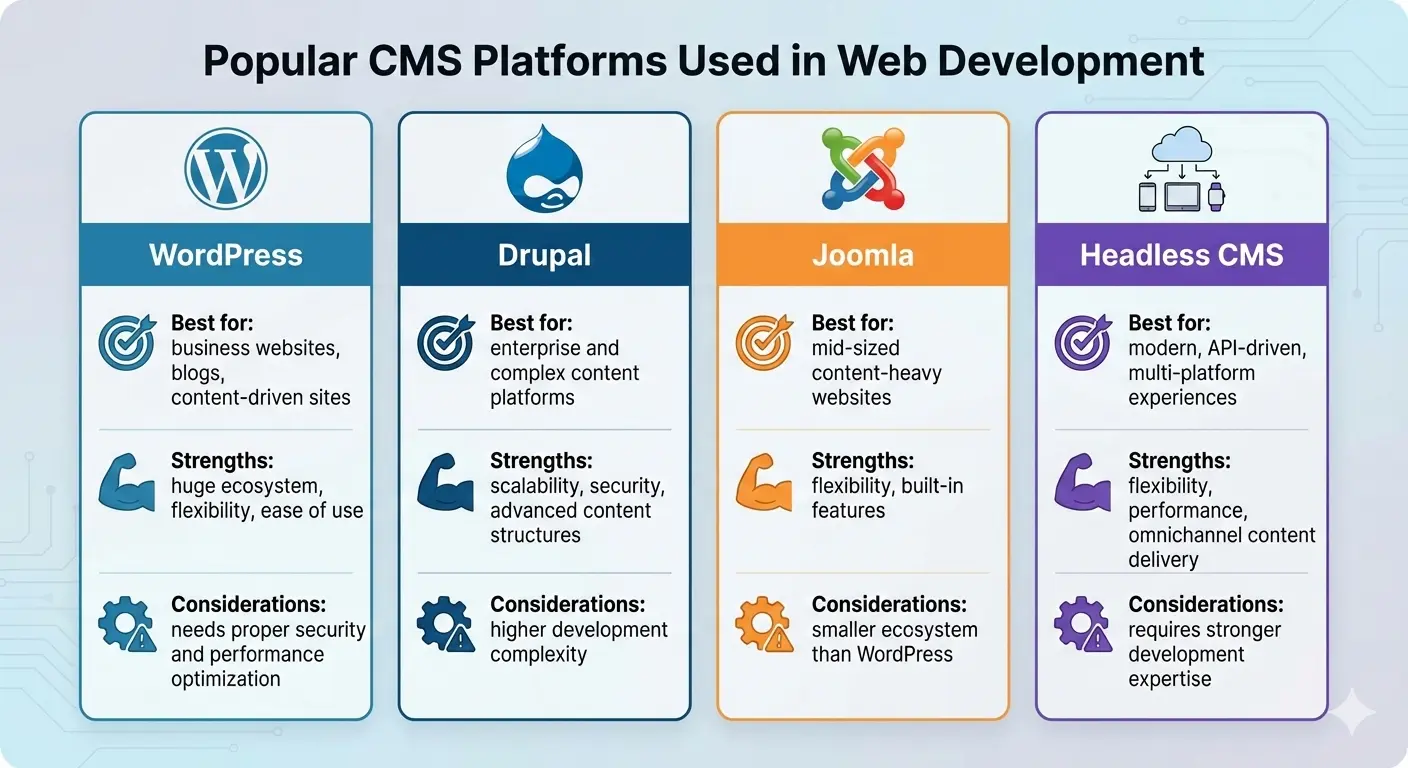
Different CMS platforms fit different needs. A good CMS web development service helps you pick the right one for you, not just the most popular option.
WordPress
- Best for: business websites, blogs, content-driven sites
- Strengths: huge ecosystem, flexibility, ease of use
- Considerations: needs proper security and performance optimization
Drupal
- Best for: enterprise and complex content platforms
- Strengths: scalability, security, advanced content structures
- Considerations: higher development complexity
Joomla
- Best for: mid-sized content-heavy websites
- Strengths: flexibility, built-in features
- Considerations: smaller ecosystem than WordPress
Headless CMS (e.g., Strapi, Contentful, etc.)
- Best for: modern, API-driven, multi-platform experiences
- Strengths: flexibility, performance, omnichannel content delivery
- Considerations: requires stronger development expertise
CMS vs Custom-Built Websites: Which One Should You Choose?
This is one of the most common questions businesses face.
Choose a CMS When:
- Your team needs to update content frequently
- Content management is a core requirement
- You want faster time-to-market
- You need a balance between flexibility and usability
Choose Fully Custom Development When:
- Your product is highly unique or complex
- Content management is not the main focus
- You need very specific workflows or logic
- Performance or architecture requirements go beyond typical CMS use
Often, the best way forward is a mix: use a CMS for content, then add custom development for your specific business needs.
The CMS Web Development Process (How Professional Teams Work)
A reliable CMS web development service usually follows a structured approach:
1) Discovery & Planning
- Understanding business goals
- Defining content structure
- Selecting the right CMS platform
- Planning integrations and features
2) Design & UX
- User experience design
- Content structure and navigation
- Responsive layouts
- Brand-aligned UI
3) Development & Customization
- CMS setup and configuration
- Custom theme or frontend development
- Plugin/module development
- Performance and security setup
4) Content Migration & Setup
- Migrating existing content
- Setting up roles and permissions
- Configuring workflows
- SEO structure and redirects
5) Testing, Launch & Optimization
- functional and performance testing
- security checks
- production deployment
- ongoing optimization and support
How to Choose the Right CMS Web Development Service Provider

This decision matters more than the CMS you choose.
1) Look at Their CMS Experience (Not Just Generic Web Work)
Ask:
- Which CMS platforms do you specialize in?
- Have you built similar projects before?
- How do you handle performance and security?
2) Evaluate Their Approach to Scalability
Good partners think about:
- Future content growth
- Performance under traffic
- Maintainability
- Long-term flexibility
3) Check Their Content & SEO Understanding
A CMS website should:
- Support clean URLs
- Allow proper metadata control
- Handle site structure well
- Load fast and perform well
If your CMS partner ignores SEO and performance, you’ll pay for it later.
4) Don’t Choose Only Based on Price
Very cheap CMS projects often:
- Rely on bloated themes
- Skip performance optimization
- Ignore security best practices
- Become hard to maintain
Think in terms of long-term ownership, not just launch cost.
Cost of CMS Web Development Services (What Affects Pricing)
There is no fixed price, because cost depends on:
- Platform choice (WordPress, Drupal, headless CMS, etc.)
- Design complexity
- Custom features and integrations
- Content migration needs
- Performance and security requirements
- Long-term support and maintenance
Two CMS projects with the same platform can have very different costs based on scope and quality expectations.
Common Mistakes Businesses Make with CMS Websites
Avoid these:
- Choosing a CMS just because it’s popular
- Using heavy themes without optimization
- Ignoring security and backups
- Not planning content structure properly
- Underestimating long-term maintenance
Most CMS issues come from poor planning and setup, not the platform itself.
Final Takeaway
CMS web development services go beyond just creating an editable website. They build a scalable, secure, and easy-to-manage digital platform that supports your business for the long haul.
When done right, a CMS-based website becomes:
- S growth engine for content and marketing,
- A flexible platform for future features,
- And a long-term business asset.
When done right, a CMS-based website becomes:
- A growth engine for content and marketing,
- A flexible platform for future features,
- And a long-term business asset.
When done wrong, it becomes:
- Slow,
- Insecure,
- Hard to maintain,
- And expensive to fix.
Choose your CMS partner carefully. The difference shows up every day you use your website.
FAQs: CMS Web Development Services
What are CMS web development services?
CMS web development services help build websites using a content management system, so non-technical people can easily create, edit, and manage content.
Which CMS is best for business websites?
WordPress works well for lots of business sites, but Drupal or headless CMS might suit complex or enterprise projects better. It all depends on your goals and how big you plan to scale.
Is a CMS website better than a custom website?
A CMS is better when content management is important. Fully custom websites are better for highly specialized systems. Many projects use a hybrid approach.
Do CMS websites need ongoing maintenance?
Yes. CMS websites require regular updates, security patches, performance optimization, and occasional feature improvements to stay reliable and secure.